National Health Service
Service Design Leadership
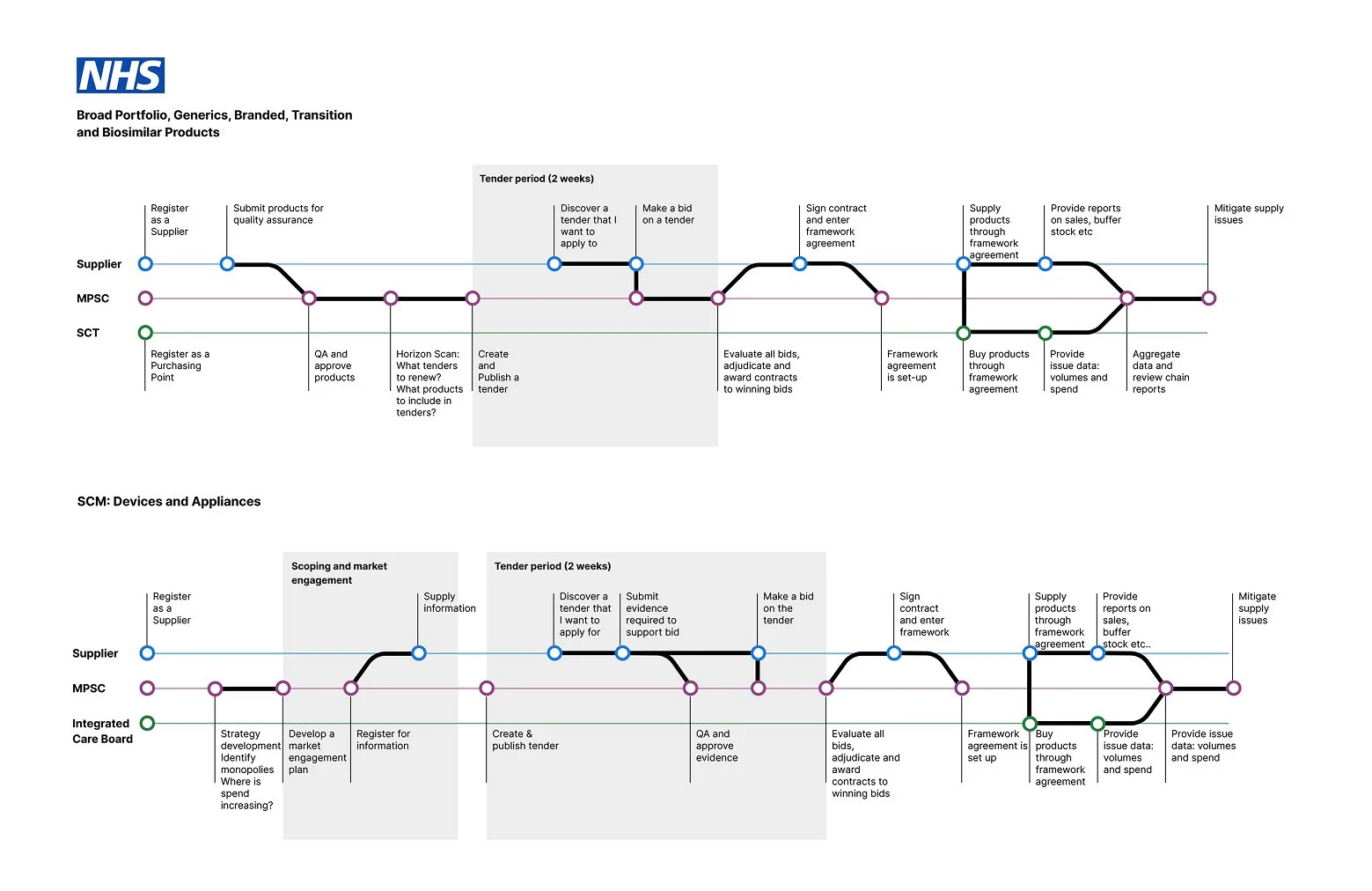
The Medicines Procurement and Supply Chain (MPSC) within NHS England is responsible for establishing the commercial arrangements for purchasing medicines used in NHS hospitals. It manages framework agreements to ensure a reliable supply of various medicines, including generics, branded drugs, biosimilars, and intravenous fluids. The MPSC also supports the Department of Health and Social Care (DHSC) in “purchasing for safety” initiatives for certain medicines.
The problem to solve
The Medicines Procurement and Supply Chain (MPSC) process currently relies on a highly manual and fragmented process for supplier and purchasing point registration, product quality assurance submissions, and tender bidding. This lack of digitization creates significant inefficiencies and user frustration, particularly as the MPSC team has limited visibility into the specific challenges faced by suppliers and purchasing points.
As a result, there is a critical need to map the existing user journeys to uncover pain points, understand user needs, and identify opportunities for improvement. This foundational understanding will enable the MPSC team to prioritize the right features and design a more streamlined, user-centered digital experience.
Discovering the solution
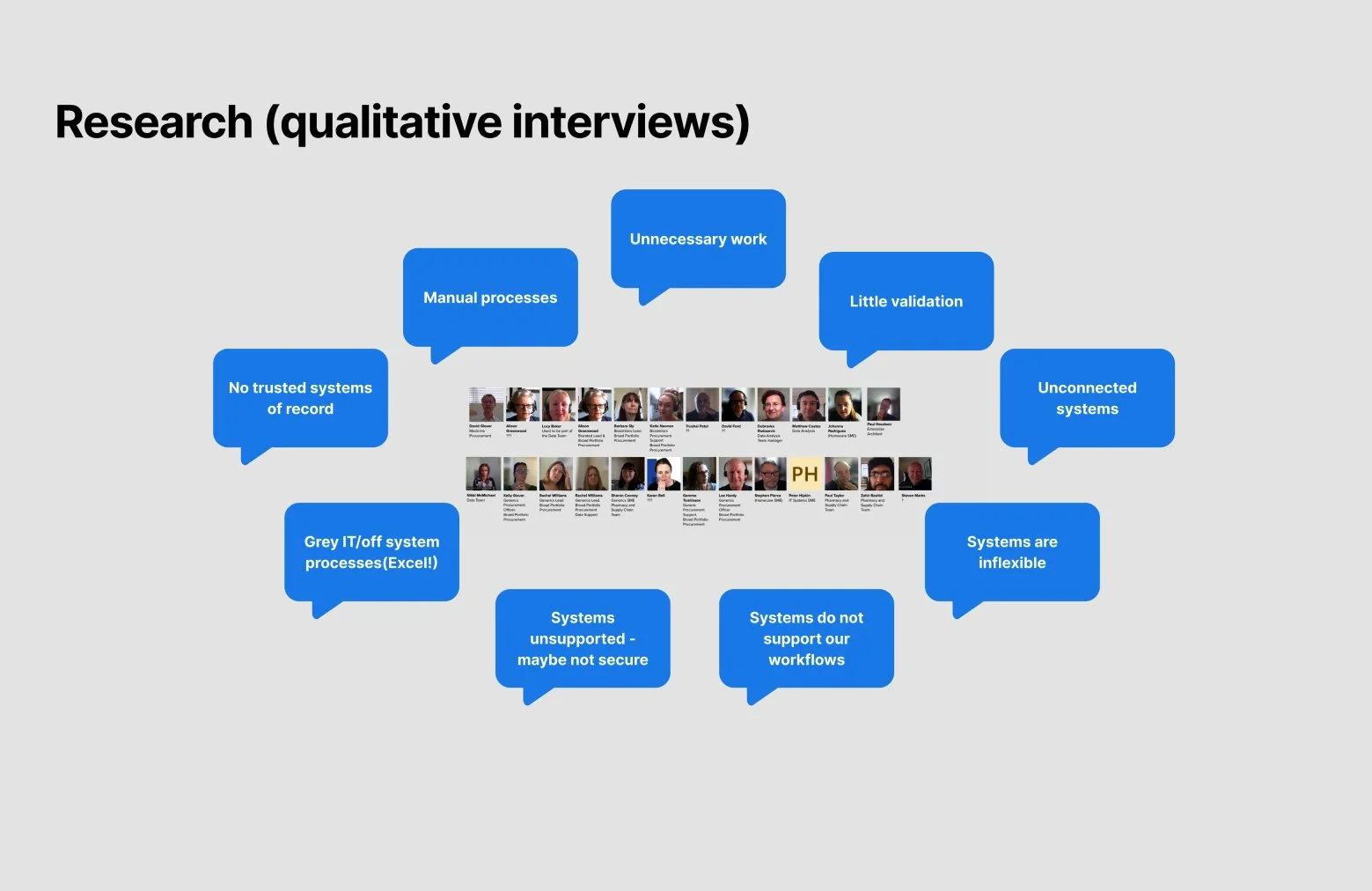
Capgemini partnered with the NHS to deliver a 10 weeks engagement focused on a discovery phase aimed at identifying the key challenges faced by suppliers and purchasing points within the Medicines Procurement and Supply Chain process. The objective was to conduct qualitative research through a series of interviews with key stakeholders to map the current customer experience, uncover pain points, and highlight opportunities for future service improvements.
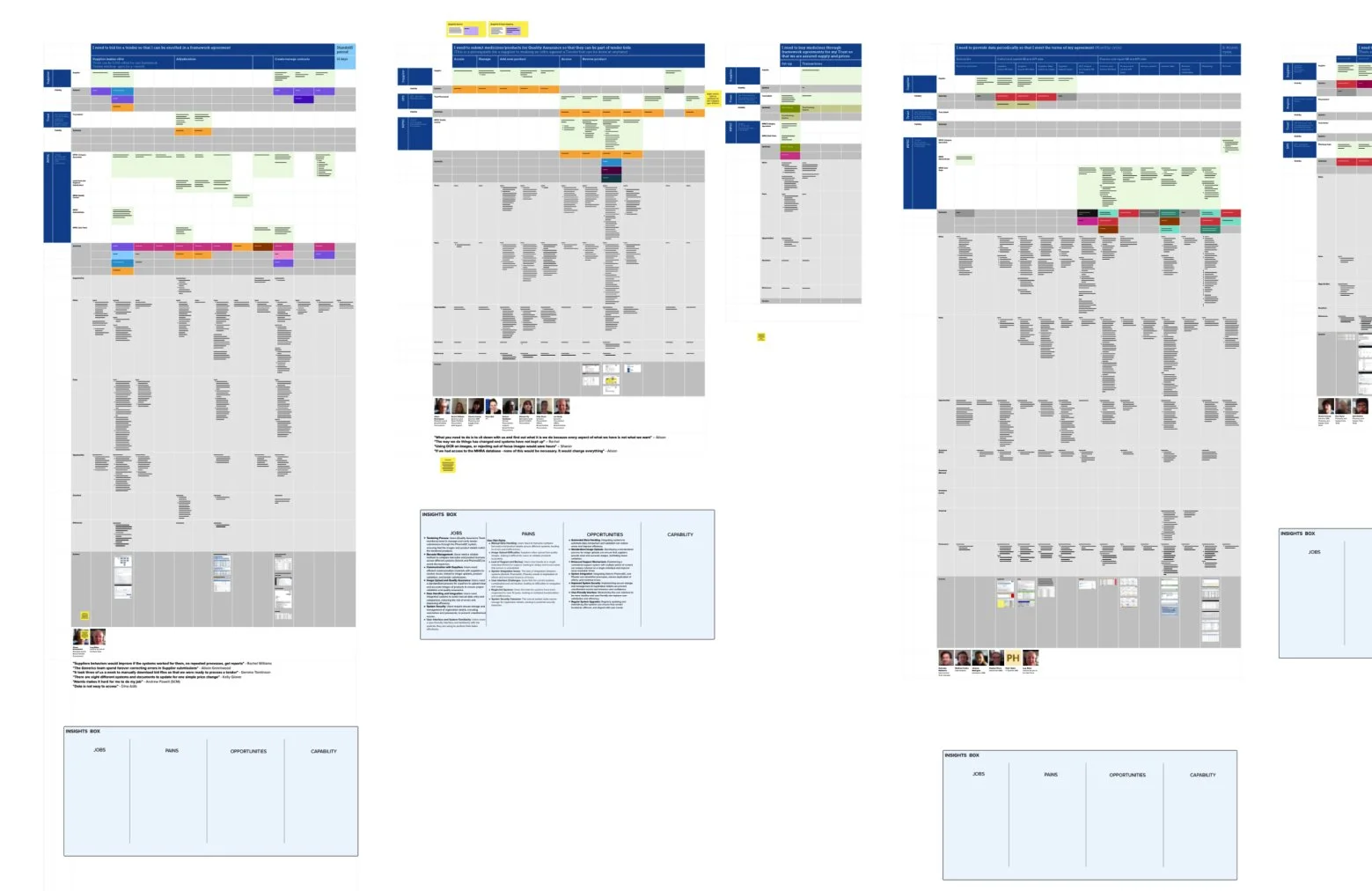
As a Senior Service Designer, my role was to engage directly with stakeholders, suppliers, and purchasing teams to understand how they interact with the service in practice. I conducted a series of in-depth interviews that enabled me to map the end to end user experience. Based on these insights, I developed detailed journey maps that illustrated the various phases users go through. I also led qualitative research to identify and highlight the main pain points at each stage of the journey, providing the team with actionable insights and areas for potential development.
The Impact
This work had a meaningful impact by providing the NHS with a clear, evidence-based understanding of the real world challenges within its Medicines Procurement and Supply Chain process. By mapping the end2end user experience and identifying pain points through qualitative research, the project laid the groundwork for more user centred service improvements. The insights created enabled the NHS to make informed decisions, prioritise areas for innovation, and enhance operational efficiency. For the product, this discovery phase provided a strategic foundation for redesigning the service to better meet user needs, improve usability, and support long-term scalability.