Ernst & Young
Service & Product Design Management
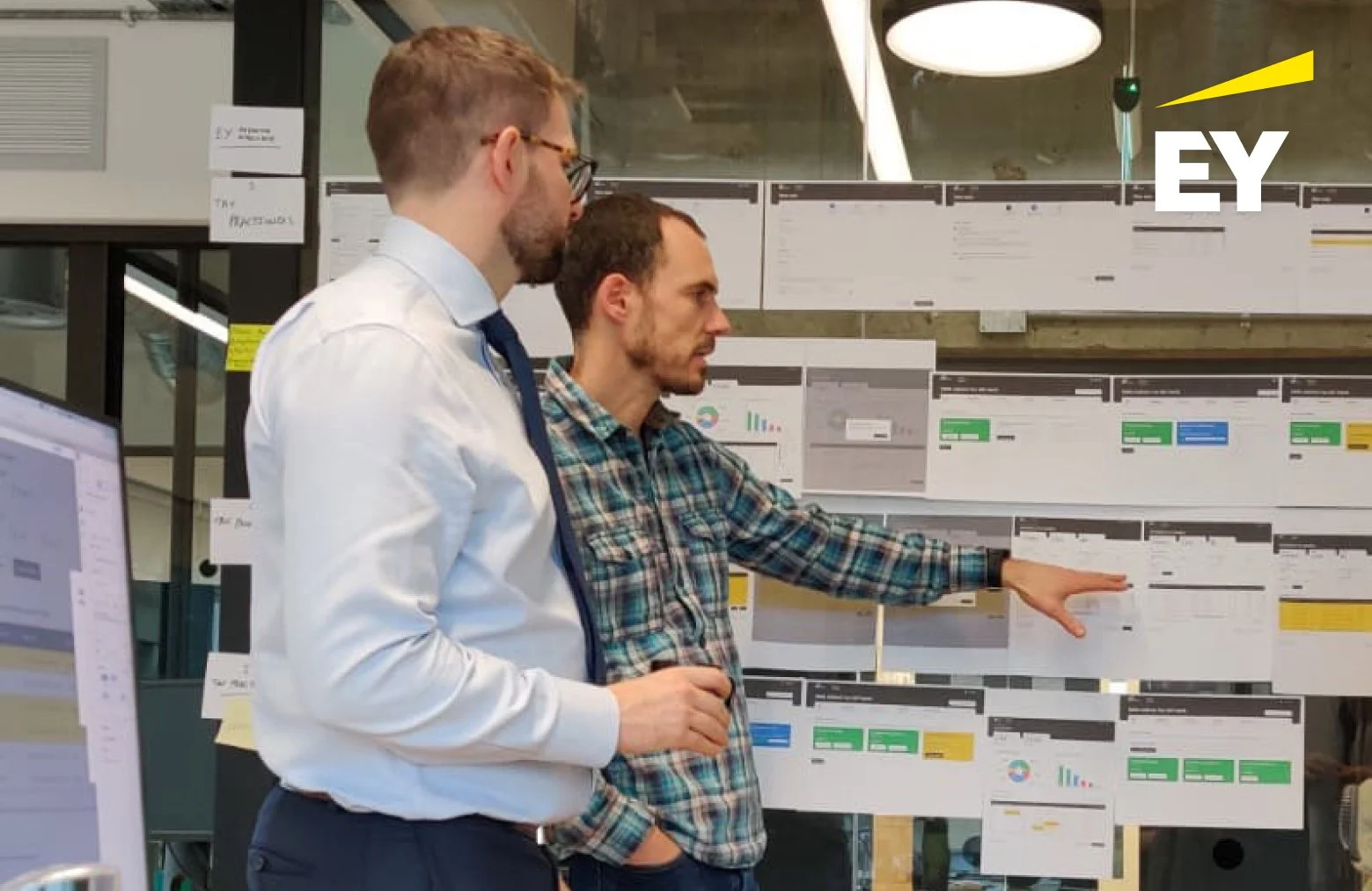
Ernst & Young is a multinational professional services network headquartered in London, UK. It is one of the “Big Four” accounting firms, alongside Deloitte, KPMG, and PwC. EY provides services in assurance, consulting, tax, strategy, and transactions to clients globally.
The problem to solve
Before the arrival of AI, auditors faced significant challenges in auditing companies and reviewing financial statements due to the limitations of manual processes and traditional tools. Data analysis was labor intensive and often restricted to sampling methods, which increased the risk of overlooking anomalies or errors in large datasets. Fraud detection was particularly difficult, as auditors lacked the advanced tools needed to identify complex or concealed fraudulent activities, relying instead on red flags and professional judgment. Manual procedures such as document verification, reconciliations, and calculations were time consuming and prone to human error. Additionally, the reliability of audit evidence was often compromised by limited access to real time data, inconsistent documentation practices, and the difficulty of verifying the authenticity of paper based records. These constraints decreased the efficiency, accuracy, and scope of audits in the pre AI era.
Discovering the solution
The proposed design solution was an interactive platform that leveraged machine learning to streamline the review of financial statements. The system automated key audit procedures such as year comparisons, internal consistency checks, and clerical accuracy verification. Upon logging in, auditors were presented with a dashboard summarizing the AI generated insights, including flagged anomalies, risk scores, and visual trend analyses.
The interface was designed for intuitive interaction, enabling auditors to drill down into specific findings, validate or challenge AI conclusions, and make manual adjustments directly within the platform. Editable fields, comment boxes, and change logs were integrated into each review screen, with all changes securely logged in an audit trail. A feedback mechanism enabled auditors to continuously refine the machine learning models, enhancing their accuracy over time. This design not only improved efficiency and accuracy but also reinforced trust in AI assisted auditing by keeping human judgment at the centre of the decision making process.
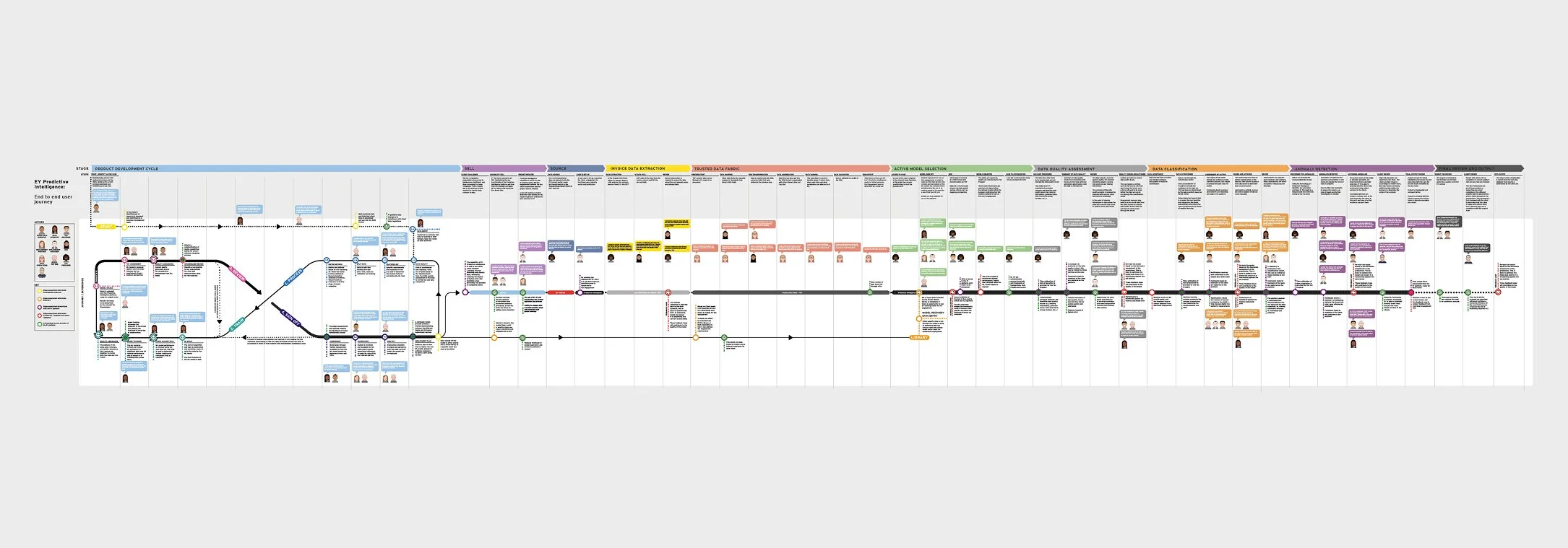
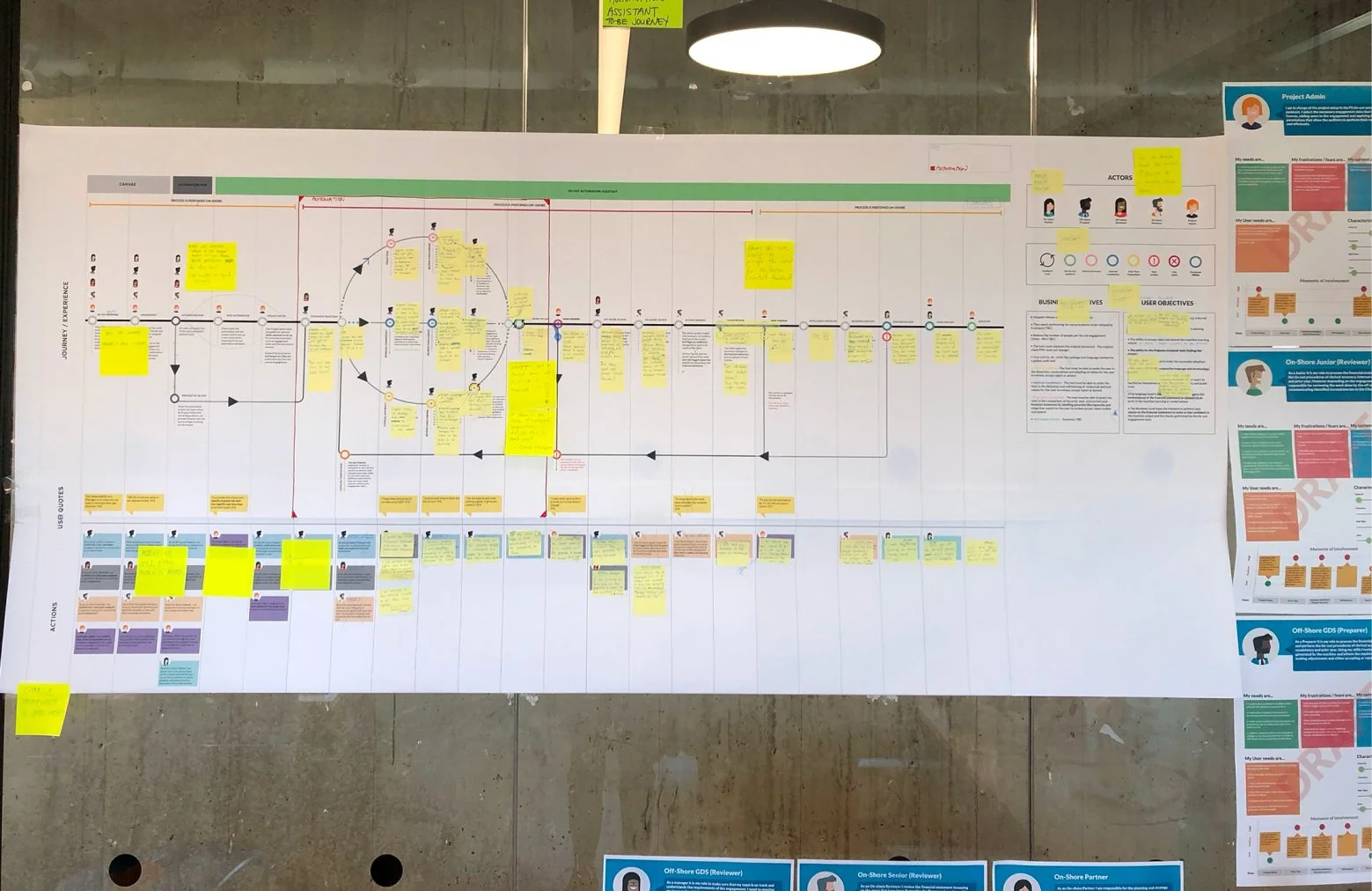
As the Lead Service Designer, my role was to map out the service ecosystem, identifying all stakeholders (auditors, data scientists, IT teams, compliance) and defining how they interact with the platform and each other throughout the audit process. Designing user journeys, creating detailed service blueprints and user journey maps that outlined how auditors engaged with the platform. Facilitating co-creation, collaborating with UX designers, developers, and auditors to prototype and test features, ensuring the platform meets the needs and supports trust in AI decision making.
The Impact
The proposed solution significantly enhanced operational efficiency and reduced costs by automating repetitive and time consuming tasks such as year comparisons, internal consistency checks, and clerical accuracy verification. This automation drastically reduced the manual workload for auditors, leading to faster audit cycles and enabling EY to handle more engagements. Additionally, the integration of machine learning improved the consistency and accuracy of audit procedures by minimizing human error and identifying anomalies that might be overlooked in manual reviews. The platform’s interactive features allowed auditors to validate, challenge, and override AI-generated insights, ensuring that professional judgment remains central to the audit process.
Implementing such a forward thinking solution positioned EY as a leader in digital transformation within the audit industry. It enhanced the firm’s value proposition to clients by delivering more insightful, data-driven audits and demonstrated a strong commitment to innovation. This not only improved service quality but also served as a key differentiator in an increasingly competitive market.