National Energy System Operator
Service Design Management
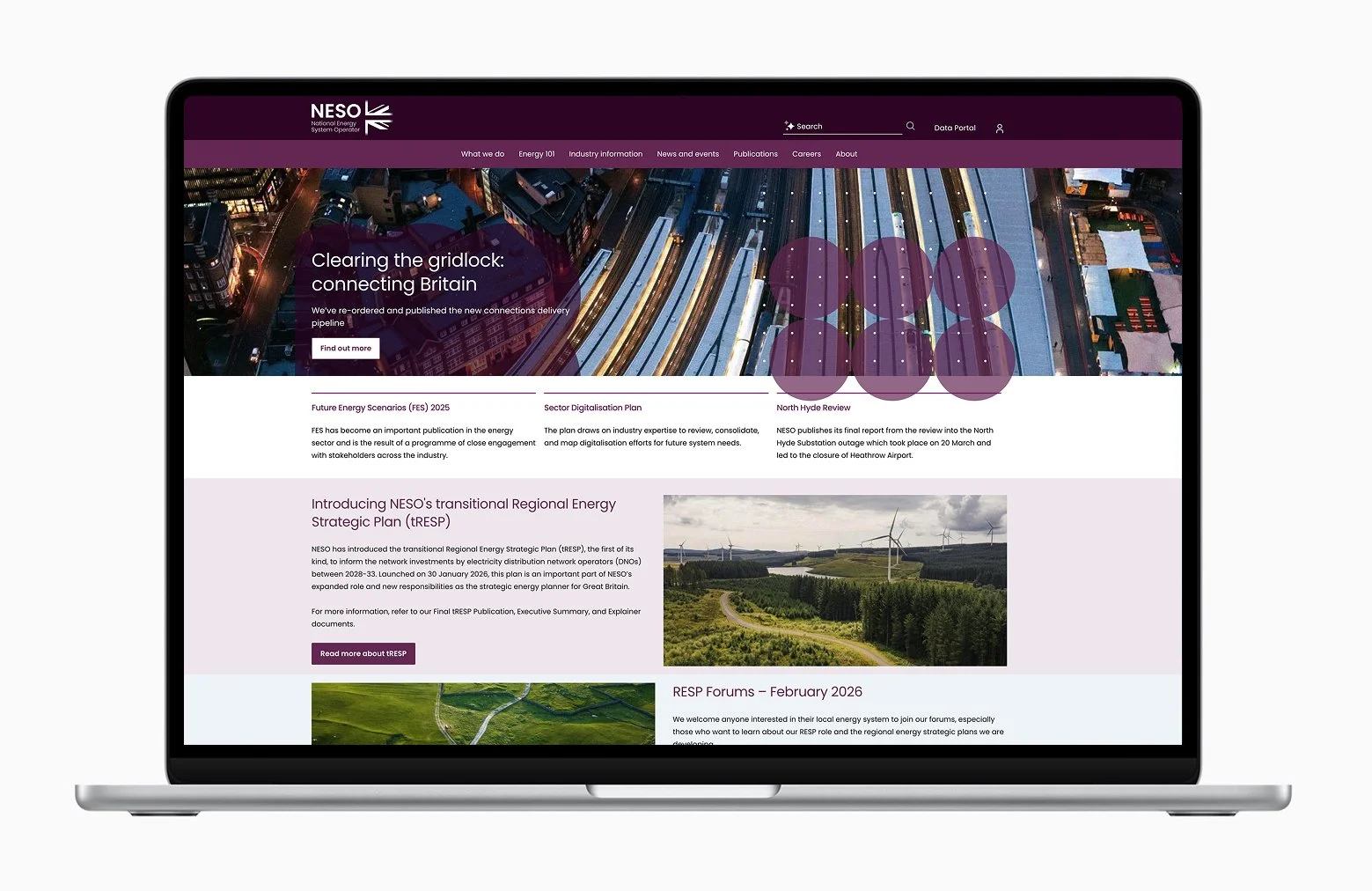
The National Energy System Operator is the nationalised energy system operator for the United Kingdom. It is a publicly owned organisation which operates both the electricity transmission and gas distribution in the UK.
The problem to solve
National Grid’s website serves multiple audiences with diverse needs. It functions both as a public facing platform used by everyone from academic researchers to general users interested in the energy sector, and as a private portal for customers with specific permissions. These users access tools like Connections, an online application that allows individuals and businesses to request new or modified connections to the electricity network, whether to receive power or to generate electricity and feed it into the grid. In addition to its wide user base, the site is governed by multiple business units, each adding content independently and without centralized direction. This has led to content sprawl, navigation issues, and a disjointed user experience.
My mission was to re-structure the site to improve information discoverability and usability. This involved creating personalized areas tailored to users’ permissions and roles, while also streamlining access to National Grid Portal applications.
Discovering the solution
To address the fragmented and inconsistent experience across National Grid’s digital ecosystem, we designed a modular, role-based digital platform that streamlined content delivery, application access, and user navigation, tailored to diverse audience needs and aligned with internal business governance.
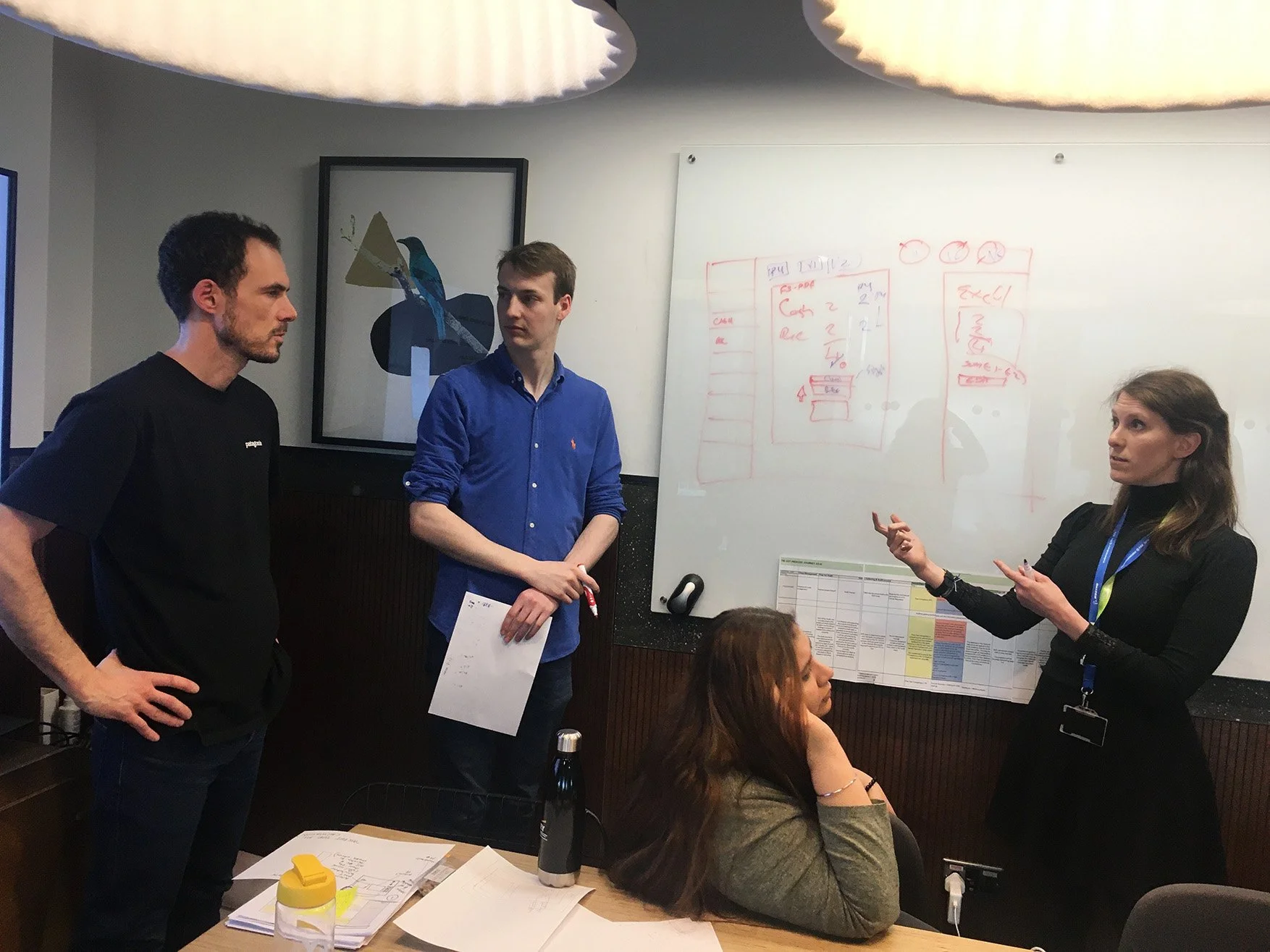
User segmentation & personalized experiences: We began by mapping out the distinct user groups, ranging from academic researchers and general energy interested users to businesses and individuals needing grid connections. By developing user personas and journey maps, we identified their specific goals and information needs. This insight drove the creation of personalized user pathways, allowing each user group to access a tailored homepage and navigation structure based on their profile and permissions. Authenticated users are granted access to secure applications such as Connections, with a dashboard providing relevant updates and actions.
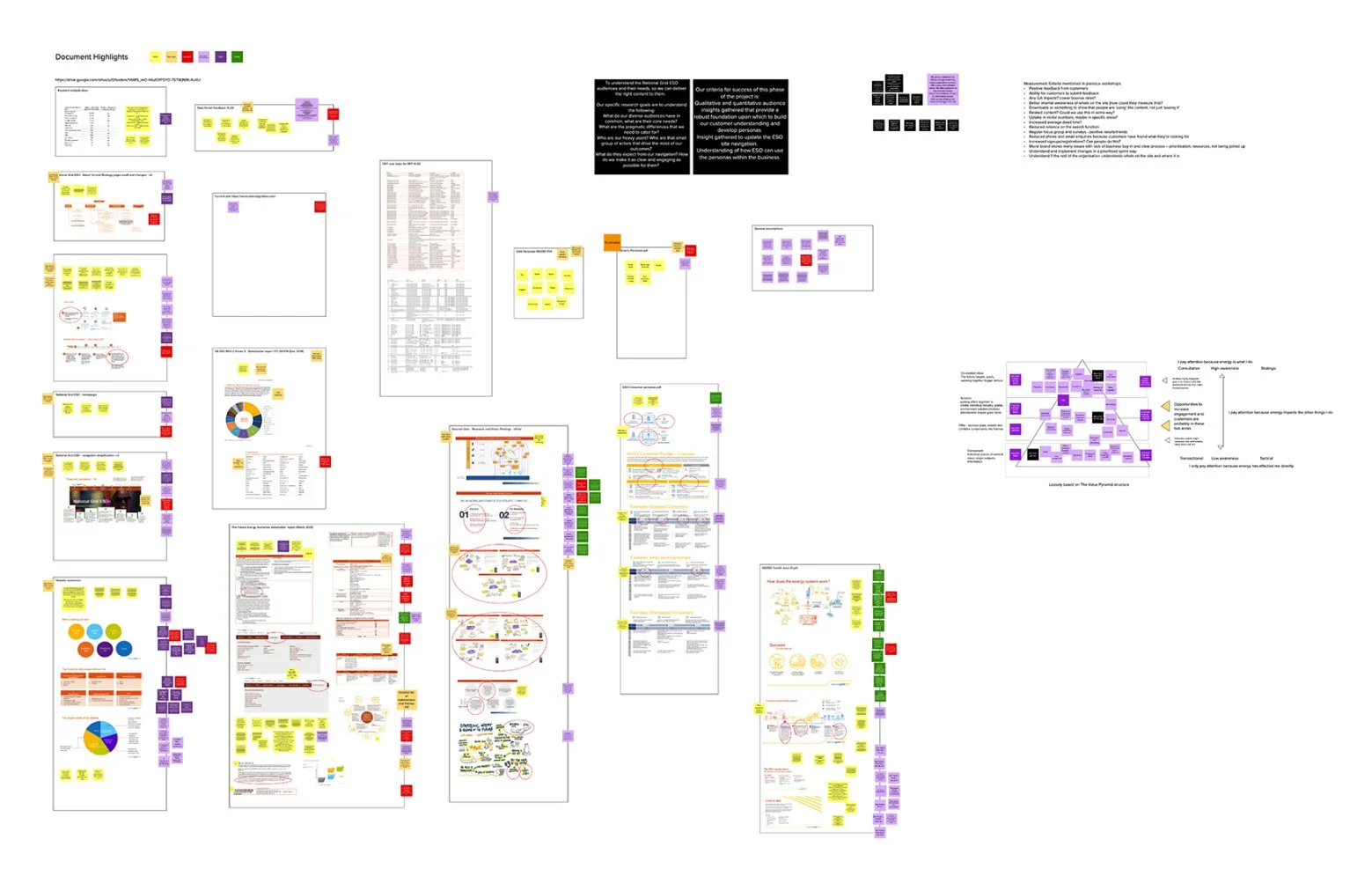
Information architecture: We conducted a content audit and usability analysis to understand content sprawl and redundancies. Using these findings, we restructured the site’s information architecture to ensure intuitive content grouping and clearer navigation paths, enabling users to find key information quickly and with minimal clicks. A search system was introduced to support efficient information retrieval, accommodating the needs of both casual users and expert researchers.
Modular design system & consistent governance: To address the issue of disconnected content contributions from various business units, we implemented a centralized design system and governance model. This included:
A component library to ensure consistency across pages and applications
Clear content governance guidelines for business units
A workflow and approval system for publishing, ensuring relevance and quality control
This modular design allows business units to contribute content within a defined framework, preserving coherence and usability across the platform.
The Impact
The redesign of NESO’s digital platform delivered measurable improvements in both user experience and internal operational efficiency:
Enhanced user experience: Personalized dashboards and role-based navigation significantly reduced time to task for key user groups, including researchers, businesses, and authenticated customers. Early usability testing showed a 40% improvement in task completion rates and a 30% reduction in user reported friction.
Improved information discoverability: The restructured information architecture and integrated search functionality enabled users to locate critical content with fewer clicks, supporting both casual browsing and expert research needs.
Operational efficiency: The introduction of a modular design system and centralized governance reduced content duplication and inconsistencies across business units. Publishing workflows became more streamlined, cutting average content approval time by 50%.